
VR/MR Evolution to Pancake Lenses
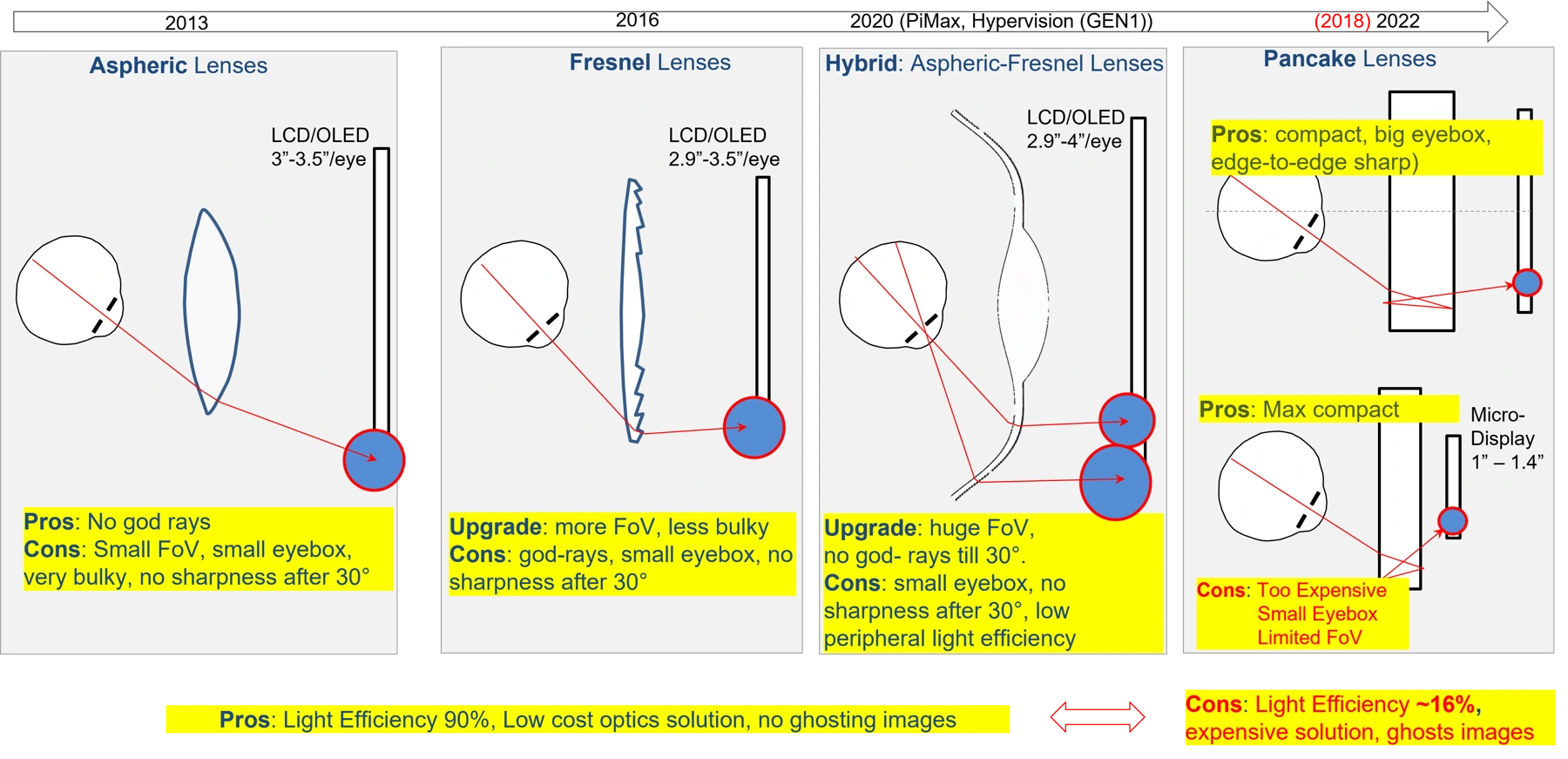
Consumer affordable VR HMDs emerged in 2013 and were based on aspheric lenses. Quite soon it was transition to Fresnel lenses partly resolving VER HMDs bulkiness and FoV, however, adding "god rays". In 2020 hybrid lenses based on aspheric part for central vision and Fresnel for peripheral vision were introduced by Hypervision and PiMax. However, industry moved to pancake lenses, starting from 2018 with numerous advantages mostly in compactness and better image sharpness and bigger eyebox.
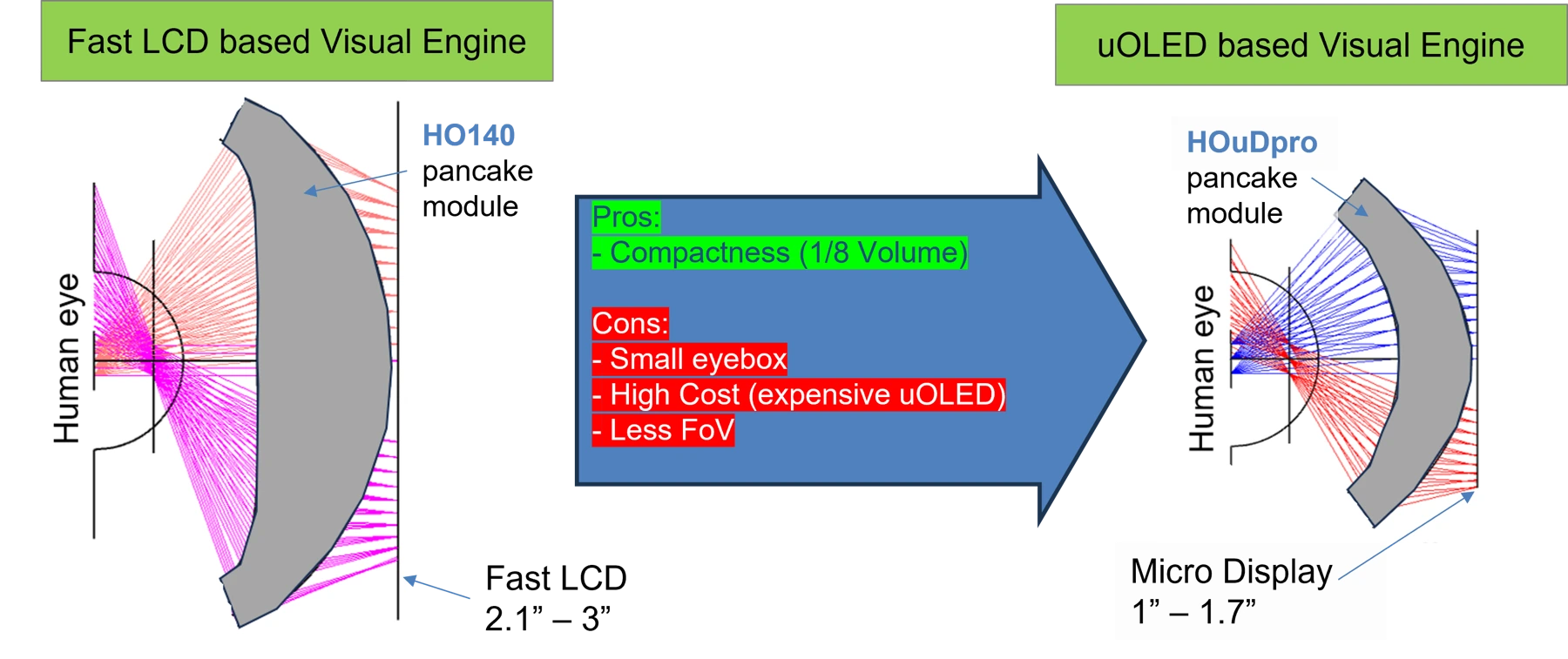
The pancake based visual engines are classified according to the display type: (1) Fast LCD and (2) micro-OLED. Hypervision is supporting both types while current focus is on the fast LCD based type since first priority is wide Fo, big Eyebox and affordability of the fast LCDs:
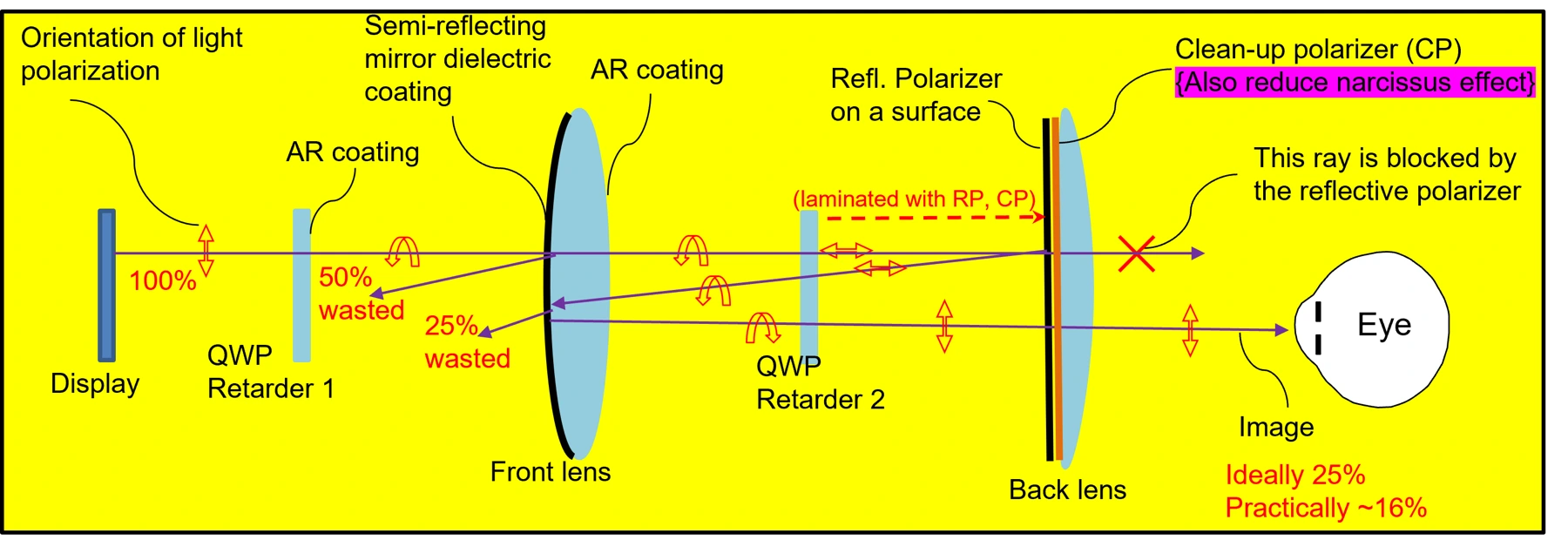
Pancake architecture achieves folding of the optical path thanks to polarization control
- More compact than other architectures due to light path folding
- Image ghosts are higher as compared to a purely refractive lens
- Sensitive to rotation of the polarization control elements and material birefringence
Details about pancake Lens by Hypervision see in the Products - GEN2 section.
For more details about pancake optics research, development and manufacturing - contact us.
Discuss this research.
For the detailed technical material or questions about these findings, contact our team.
Contact Hypervision →